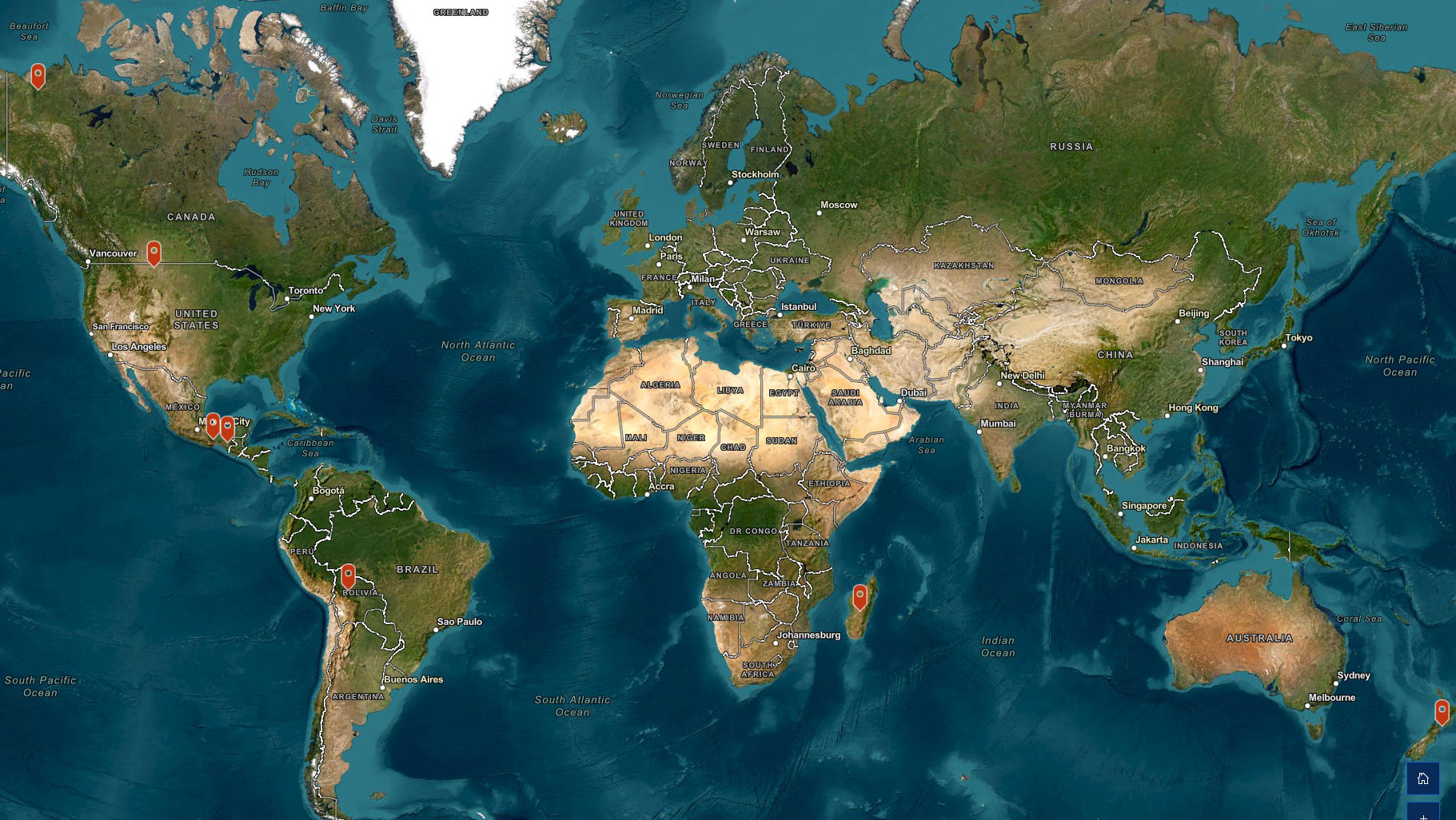
For my senior spring break, three friends and I decided to do something a bit different. Our collective intrigue for adventure and the outdoors brought us to drive thirteen hours south to Tennessee, home of the Great Smoky Mountains National Park. Not knowing much about the ecology of the area or its complicated history, I made it a priority to research and document, through photos, the complex natural and historical relationships that the national park has to offer. My curiosity about human relationships with public land and their histories was at the forefront of my exploration, but the journey proved to have insights beyond my original intention.
The land we now call the Smokies has long been the sacred homeland of the Tsalagi – the Cherokee people – who call the Smokies Shaconage, “the place of blue smoke.” The land has an upsetting history of injustice, which has been silenced and unseen from the public eye. Between 1923 and 1940, the national park was created when the legislatures of Tennessee and North Carolina purchased six thousand land parcels. Thousands were displaced and removed from their homes, farms, and small communities. These removals echo an even darker history with the infamous 1838 forced march of 16,000 Tsalagi people from their homeland west in the Trail of Tears. Mooney writes, “families at dinner were startled by the sudden gleam of bayonets in the doorway and rose to be driven with blows and oaths along the weary miles of trail that led to the stockade” (Mooney, 1902). Today, millions walk these trails each year, unaware of the cost of their preservation.
A story of patterns, awe, resilience, interconnection, and timing follows below. My essay is an exposure to seeing national parks in their true light. Juxtaposing memory, harm, and healing, I want to question our relationship with national parks and my own relationship with the environment. In doing so, I interweave quotes from classic American thinkers and Indigenous activists alike.
Day One: Elkmont Campground to Campsite 26
“But when, following the invisible steps of thought, we come to inquire, Whence is matter? and Whereto? Many truths arise to us out of the recesses of consciousness.”
Ralph Waldo Emerson, Nature (1836)
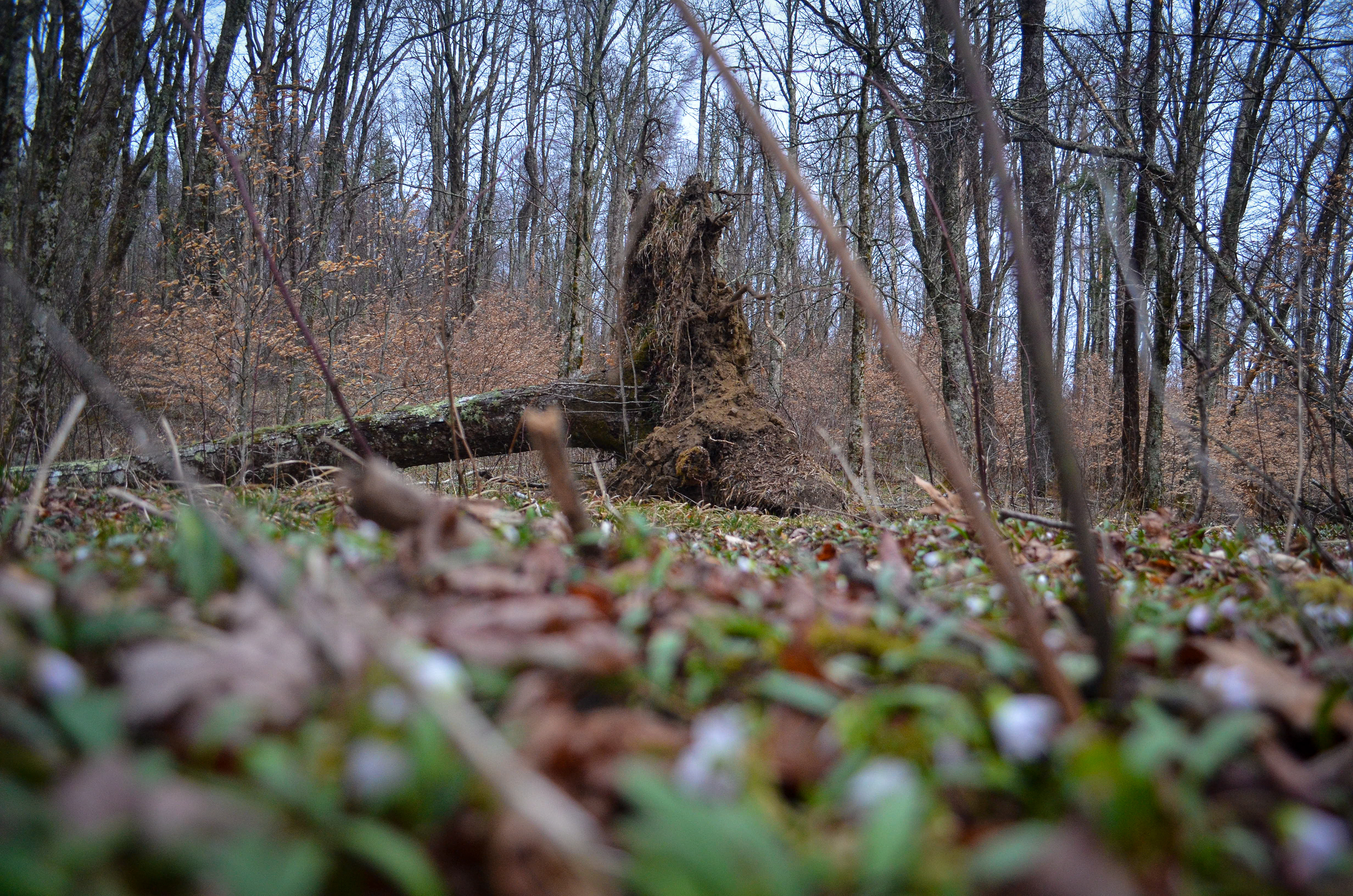
We began our journey into foreign territory, bearing the weight of stuffed packs with six days of food and supplies. Suddenly, I was brought back to a moment just four days earlier, when in my brainstorm, my intuition brought me to the perfect route for our six-day exploration of Smoky Mountain National Park in Tennessee. We began our journey on Jake's Creek Trail, a well-traveled path that steadily gained incline as we continued our march. The first moments of a backpacking journey were filled with wonder. For me, these were the moments in which anticipation and curiosity collided. I could not fully experience the moment from the window of a car. With my boots placed on the ground, lungs full of fresh air, and eyes ready to dance between the canopy and fallen leaves, I explored my new world. The transformative process began with motion, the act of walking toward my destination. While the destination was simple—a point on my map— Campsite 26— it was guarded by elevation, distance, and unfamiliar terrain. Once in motion, my curiosity pivoted to translating the environment around me. I questioned the flowers that started to dot my peripheral vision, and I recognized the bursts of Rhododendron leaves encroaching upon the stream and tumbling down the slope to my right. A small white butterfly snapped my attention back left, delicately bouncing in a vibrating pattern of glee. A bridge with one rail crossed the stream that was following us, and we ascended higher upon the ridge leading us towards 26. After a lunch break at “Jake's Gap,” we found ourselves at Campsite 26. Marked with an incredible downed tree, our first campsite greeted us with a grove of hemlocks, ready for our hammocks and tent.
Day Two: Campsite 26 to Double Spring Gap
“I found myself suddenly in the shadow of a cloud, and the thunder began to rumble with such emphasis that I could do no more than listen to it.”
Henry David Thoreau, Walden (1854)
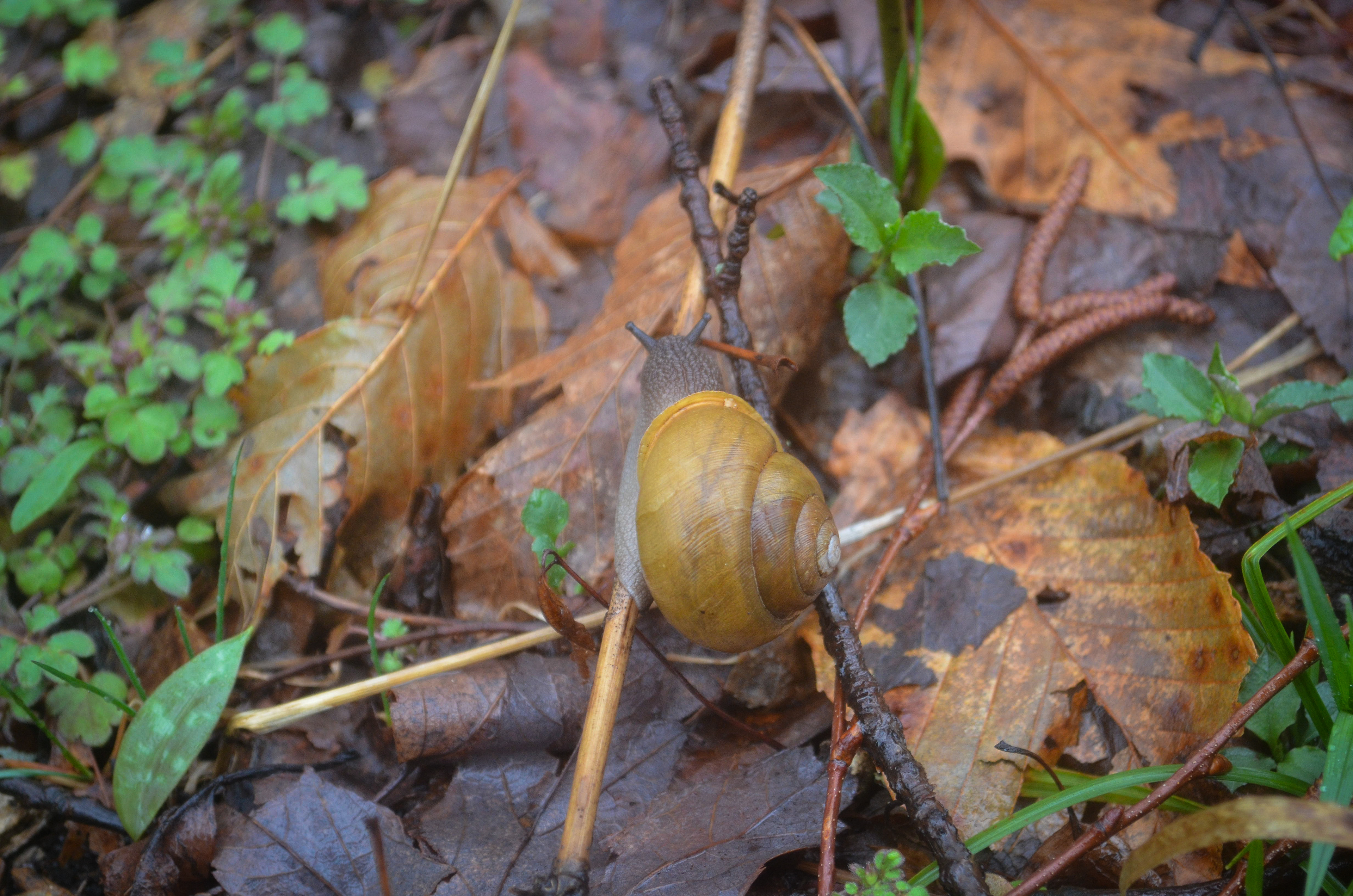
After a night of pesto pasta, high winds, and an inquisitive deer herd that inspected its visitors, we began our day two climb to the pleasant nudge of hail, rain, and a rumbling sky. With eight miles and 2,253 feet of elevation gain ahead of us, potential challenges laid ahead. I layered rain gear feeling protected enough to venture into the misty forest of towering branches. I admired the tree's strength and condition as we ascended across their domain. Moss and lichens plastered across their weathered trunks, and wind swayed their budding branches, but they stood steadfast. As we hiked onwards, traversing through pockets of mist and dampness, I noticed a snail slowly moving along a stick. Thunder echoed far in the distance as I took its portrait, the snail driving forward on its mission just like us. Gliding with nerves of wet rocks and ledges, lightning flashes continued to shock our vision, and counting 1…2…3…4 seconds before a great boom reverberated through the ground to our feet. I knew that the sound had come from the direction in which we were headed, at an elevation of 5,238 ft. Feeling a strong sense of humility, I felt it was necessary to slow down like that snail. We continued downwards on the trail to a low point and set up our rain tarps as torrential rain and angry clouds growled fiercely above us. The storm passed directly over us, and light rays of sunshine invited us to continue as we approached the infamous Appalachian Trail. Through-hikers on the 800-mile quest toward Maine were baffled by our presence. “It’s our Spring Break!” we exclaimed. They responded with words of encouragement and utter disbelief that anyone else would be brave enough to venture through the storm. I guess he had not seen any snails.
Day 3: Double Spring Gap to Mount Collins
“Oh, the blessed enchantment of those Saturday runaways in the prime of the spring! How our young wondering eyes reveled in the sunny, breezy glory of the hills and the sky, every particle of us thrilling and tingling with the bees and glad birds and glad streams!”
John Muir, The story of my boyhood and youth (1913)
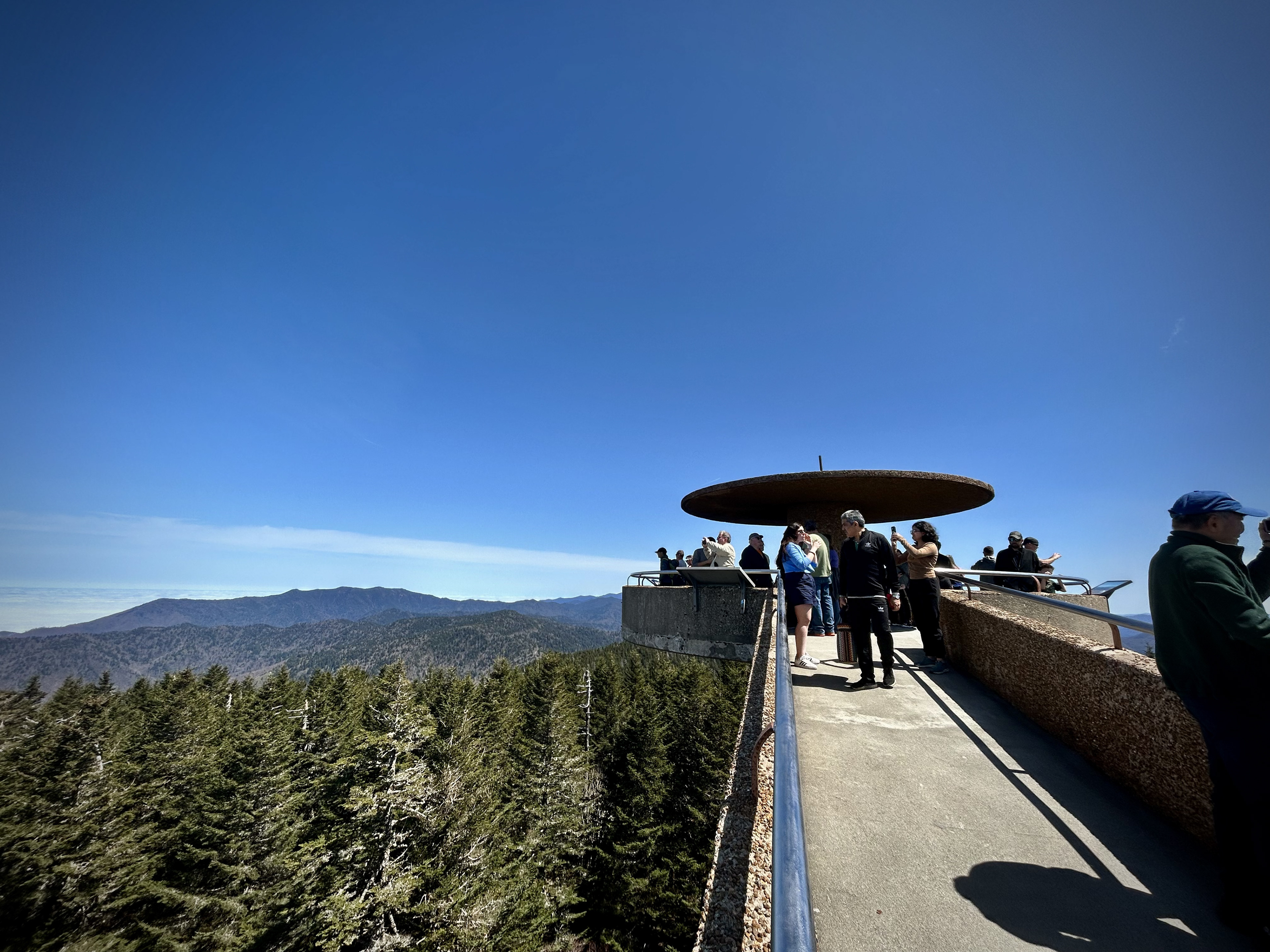
The evening at Double Spring Gap was spent with folks such as “Father-time,” an elementary school teacher who wanted to do something challenging and break away from complacency. “Blue Jeans” from Wales wanted to avoid taxes in his home country, and “Beats” craved a year of exploration after graduating, a respite before she began studying prison psychology at the University of Colorado. The social night was very cold and windy. Still, the day brought the sunshine and motivation we needed for three miles and the 1400 ft climb to Clingmans Dome, the halfway point of our trek, and the highest point in Smoky Mountain National Park and the Appalachian Trail. Hiking through dense spruce-fire forest, beautiful vistas from all sides interrupted our focused determination. As we approached our destination in Mount Collins shelter, I was reminded through a new trail sign of the mountain's indigenous name, Kuwohi. Kuwohi, the name given to the sacred mountain at the center of ancestral Cherokee lands, felt like much more than a name. Meaning “the mulberry place” in Tsalgi, the name was restored in 2024 after 165 year,s from the direct initiative of the Eastern Band of Cherokee Indians. Like the trail names of the through-hikers we met, the mountain's name felt deeply personal. Gazing out from the tower built at its peak, I overheard conversations from visitors marveling at the stunning beauty. Especially memorable was the quote of a young boy exclaiming to his father, “Look at the clouds; it looks like the ocean!”Notably, the Cherokee creation story states that at the beginning of time, “the earth was all water. There was no land. All the four-leggeds, all the animals, all the winged-ones, lived up in the sky on the clouds” (Dixon, n.d.).
Day 4: Mount Collins to Campsite 24
“Our hearts are sickened, our utterance is paralyzed, when we reflect on the condition in which we are placed.”
Chief John Ross of the Aniyunwiya (Cherokee), (1836)
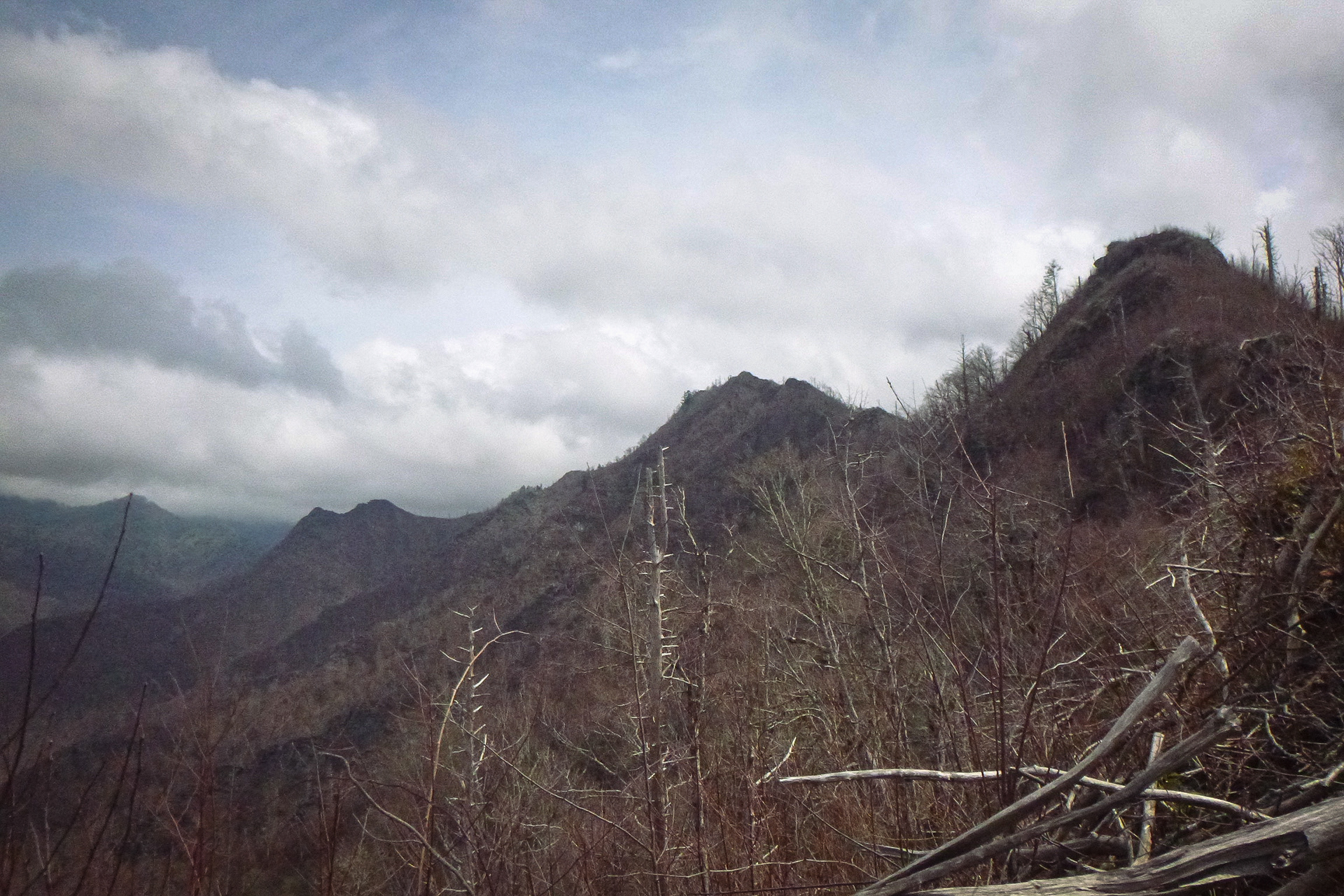
We left the Appalachian Trail at Mount Collins Shelter and began our descent back into the river valley. An eight-mile day, this new area of the park had a feeling of raw beauty but an essence of grave destruction. In 2016, fires burned more than 10,000 acres of the park centered around Duniskwalgunyi igun’i (chimney tops), taking 14 lives and injuring 190 in one of the largest arson-caused fires in the history of Tennessee (National Park Service, 2023). Walking along the fire-scarred ridges of Duniskwalgunyi iguni, I observed how the land displayed historical wounds. Skeletal remains of Notsi (pine), Dasudagwalegwa (chestnut oak), Notsi iyusdi (spruce), and tsunenonvdi (birch) served not only as reminders of nature's fragility but of the violence enacted upon the Tsalagi people. The fire caused by man had charged through these mountains, forcibly reshaping their ecological character. Dead branches hung over the trail, cracking in the wind, taunting us as we walked atop the barren ridgeline. With wind gusts blowing into the thirty-mile-per-hour range, the traverse felt like a minefield of danger. Yet, in noticing the tiny yellow wildflowers emerging in the undergrowth, I found hope—an embodiment of Tsalagi survival and the necessary resilience from a traumatic history. Notsi (Pine) seeds would have been sown deep, facilitated by the fire in the seed's genetic adaptations to the element for regeneration. The regrowth of these trees represents more than ecological recovery. It mirrors the spirit of resistance and identity that I felt remained deeply intertwined with the land we walked upon.
Day 5: Campsite 24
“At daybreak the whole party went down to the running stream, where the pupils or hearers of the myths stripped themselves… and dipped seven times unde the water, while the priest recited prayers upon the bank.”
James Mooney, Myths of the Cherokee (1900)
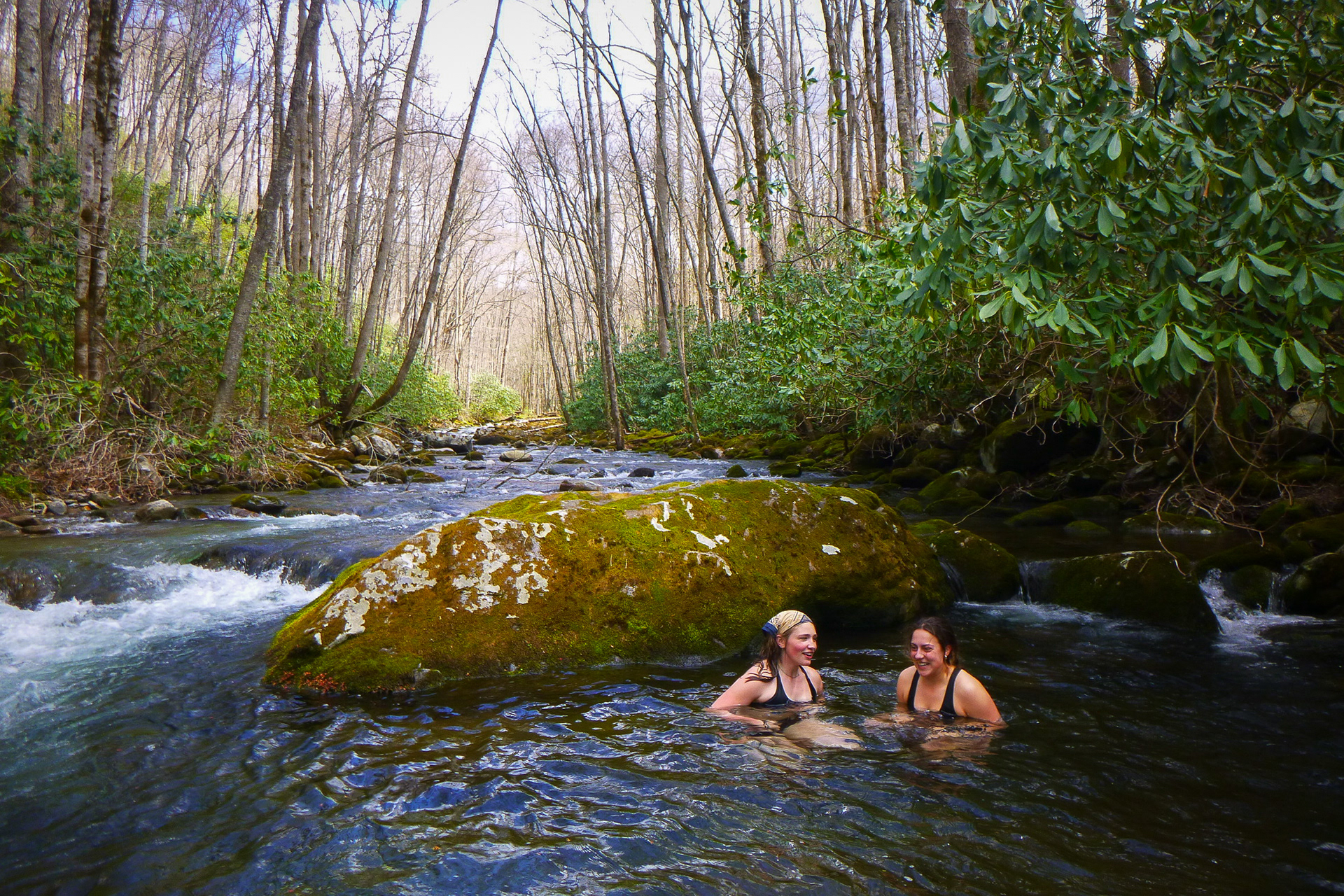
The following day, on the banks of the little river, I climbed out of my hammock, grabbed my fly rod, and began a day of exploration in the welcoming waters that bent through our campsite. As the fog lifted and the air warmed, my attention was piqued by a sparkling piece of quartz nestled under the gentle waves of an eddy. I reached for it, expecting it to come free, but it did not. A root had grown around it, latching it in place. Tracing it back, I followed the twisted route to the trunk of an incredible Kuwakunega (sycamore) tree whose roots grasped the entire bank. It was holding the river together. Quietly stabilizing a world that would collapse without it. As Tsalgi had done for millennia, I dipped my head under the cold mountain water, immersed in the world of the river and the creatures within its domain. As I caught rainbow and brown atsadi (trout), I understood that this was not just a place of ecological function or recreation. This was a site of active relationships. These public lands that were cared for by generations of Tsalgi must be reframed not as preserved wilderness but as living systems of reciprocity, memory, and belonging, all in accordance with the people whose livelihoods depend on these resilient but fragile systems. Later that night, I gathered atsadi galidi (wild mint), from which we steeped an aromatic tea to sip late into the evening. The air was warm, and my mind calm; I felt at peace with the environment around me.
Day 6: Campsite 24 to Elkmont Campground
“Adopt the pace of nature: her secret is patience.”
Ralph Waldo Emerson, Nature (1836)
The final morning, I arose to a forest transformed. Warmness and sunshine beamed down upon us, the wind softened, and life awakened. The bare trees were replaced by the infant green sprouts of new leaves, and the forest floor was littered with whites, pinks, and purples, a gorgeous array of wildflowers to blanket the landscape. It was as if the mountains had chosen to be reborn after restless storms and the wind had hushed their eagerness for spring. Suddenly, it was the last day of our trip, timed with the forest's decision to begin its awakening. An ahawi (deer) meandered into our camp as we prepared to leave. Lonely and frail, I felt its gratitude for the new plethora of flowers and forage to feast on. It, too, had been waiting for this moment. In the indigenous worldview, it is recognized that time is not in straight lines but in circles. Life, death, rebirth, and all the patterns of nature move in rhythm with the land. The forest had been waiting, not out of laziness but because there is wisdom in timing. I carried this awareness as we descended the trail and re-entered the world of paved roads and day hikers enjoying the weather. Public lands must be spaces that preserve what is wild and remind us how to live. We don’t need to dismantle the idea of national parks, but we must rethink their meanings. Let them become spaces not only for hiking and scientific wonder but also for healing and cultural return. The land remembers, even when we forget. In this remembering lies the possibility of repair.
- Rhys Healy

Sources
Cherokee Nation. (n.d.). Cherokee-English dictionary online. https://language.cherokee.org/cherokee-dictionary/
Emerson, R. W. (2009). Nature. Project Gutenberg. https://www.gutenberg.org/files/29433/29433-h/29433-h.htm (Original work published 1836)
Thoreau, H. D. (1995). Walden; or, Life in the woods. (J. Lyndon Shanley, Ed.). Princeton University Press. (Original work published 1854)
Muir, J. (2003). The story of my boyhood and youth. Dover Publications. (Original work published 1913)
Dixon, J. (n.d.). Tsalagi creation story – Cherokee. UCAN Tribe. https://ucantribe.com/tsalagi-creation-story-cherokee-2/
Ross, J. (1836, September 28). Letter from Chief John Ross of the Cherokee, Georgia, 1836 [Letter]. Red Clay Council Ground, Cherokee Nation. History Matters. https://historymatters.gmu.edu/d/6598/
National Park Service. (2023). Chimney Tops 2 Fire. U.S. Department of the Interior. https://www.nps.gov/grsm/learn/chimney-tops-2-fire.htm
Mooney, J. (1900). Myths of the Cherokee (19th Annual Report of the Bureau of American Ethnology, 1897–98, Part 1, pp. 3–548). U.S. Government Printing Office. https://www.gutenberg.org/files/45634/45634-h/45634-h.htm
National Park Service. (n.d.). Stories of the Great Smoky Mountains. U.S. Department of the Interior. https://www.nps.gov/grsm/learn/historyculture/stories.htm